Paid traffic does not fail in the ad account. It usually fails on the page. We diagnose the friction between click and conversion so your existing traffic has a better chance of turning into qualified pipeline.
20+
Years Enterprise UX
Friction
Prioritised by impact
1:1
Executive review included
Post-Audit Focus
Priority Fixes
Clear next stepsYour paid campaigns may be generating the right clicks. The problem is what happens after the click: weak message match, slow time-to-value, trust gaps, and forms that ask for commitment before the buyer is ready.
If the page does not make the offer, audience, and business value obvious in the first screen, buyers hesitate or bounce before sales ever gets a chance to engage.
When a buyer finally clicks to talk, long or confusing forms create avoidable drop-off. The issue is not just form length. It is perceived effort, unclear value, and poor sequencing.
B2B buyers judge credibility fast. Weak proof, generic claims, and inconsistent page structure lower trust before your team can earn a conversation.
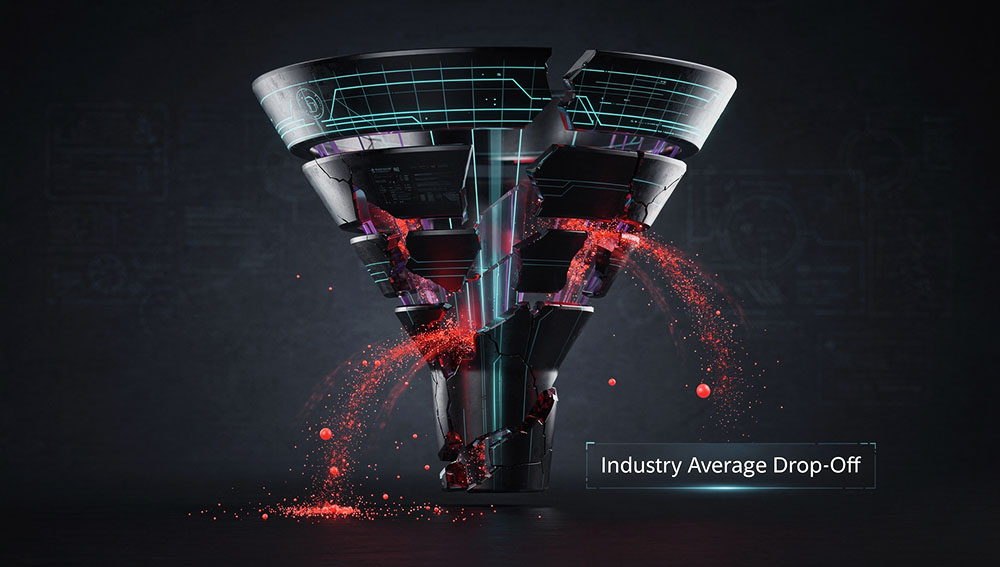
Landing-page friction compounds paid-media inefficiency by lowering the percentage of qualified visitors who become real sales conversations.
We review the funnel like an operator, not like a redesign agency: where the message breaks, where trust drops, where forms over-ask, and what to fix first for the highest commercial impact.
We start with the commercial path, not the visuals. We map where buyers lose momentum across the visit-to-conversation journey and identify the highest-friction moments first.
We evaluate hierarchy, message clarity, trust signals, CTA sequencing, and form effort to find the avoidable friction reducing conversion efficiency.
You receive a prioritised action plan with rationale, expected business impact, and implementation direction so your team can move on the highest-value fixes first.
If your paid traffic is landing but not converting efficiently, this is where we identify what is actually getting in the way.
Request a Funnel DiagnosticMarketing leaders do not need generic design optimism. They need sharper diagnosis, clearer priorities, and recommendations that can be defended internally and implemented fast.
Illustrative Scenario
A typical issue: the buyer has enough intent to click, but the form asks for too much too early. The right fix is usually better sequencing, clearer expectations, and less visible effort.
Primary focus
Reduce visible effort
Expected effect
Higher completion rate
Illustrative Scenario
Another common issue: paid visitors arrive, but the first screen does not make the problem, audience, and payoff obvious enough. Stronger hierarchy and clearer value communication usually improve engagement quality.
Primary focus
Clarify value faster
Expected effect
Better message match
"The value was not another redesign discussion. The value was getting a clearer view of where the funnel was underperforming, why it was happening, and what to fix first."
Typical stakeholder outcome
Used internally to align marketing, product, and design
This is a focused working session to review one important page, identify the most likely friction points, and decide whether a deeper audit is justified.
A fast diagnosis of the page elements most likely suppressing conversion efficiency.
A practical walkthrough of message clarity, trust gaps, CTA structure, and form effort.
Clear next-step recommendations your team can prioritise after the call.
Choose a time for an initial fit review.
Request a Review100% Confidential & Secure
Analysis and teardown content for teams trying to improve message clarity, trust, and conversion efficiency without defaulting to a full redesign.
You receive a prioritised audit readout: the key friction points, why they matter commercially, which fixes to sequence first, and what your team should measure after implementation. Where relevant, implementation guidance can be provided for design or development teams.
An internal team usually has context. What it often lacks is distance. We bring an outside view focused on buyer friction, decision clarity, and commercial priority, so the discussion moves from opinion to evidence and sequencing.
Success is measured against the part of the funnel being addressed: engagement quality, form completion, meeting requests, qualified pipeline signals, and downstream sales conversations. We define what should be tracked before implementation so the team is not guessing afterward.
Access to analytics, session recordings, or sales feedback improves prioritisation, but it is not always required for an initial review. We can start with the live experience and then go deeper if the engagement moves forward.
That is normal. Recommendations should survive commercial scrutiny. We explain the rationale behind each priority, discuss constraints openly, and adjust sequencing where needed. The point is not to defend ego. The point is to improve outcomes.
Yes, where there is a fit. Support can include implementation review, prioritisation workshops, or ongoing advisory input so the recommendations do not die in a slide deck.